
12 September 2026
Roof Valley Repair Ashley Green: How MP Roofing Stops Valleys Failing Again
Roof valleys collect the most water and debris, so they fail first. Here's why Ashley Green homes are affected and how MP Roofing repairs them properly.
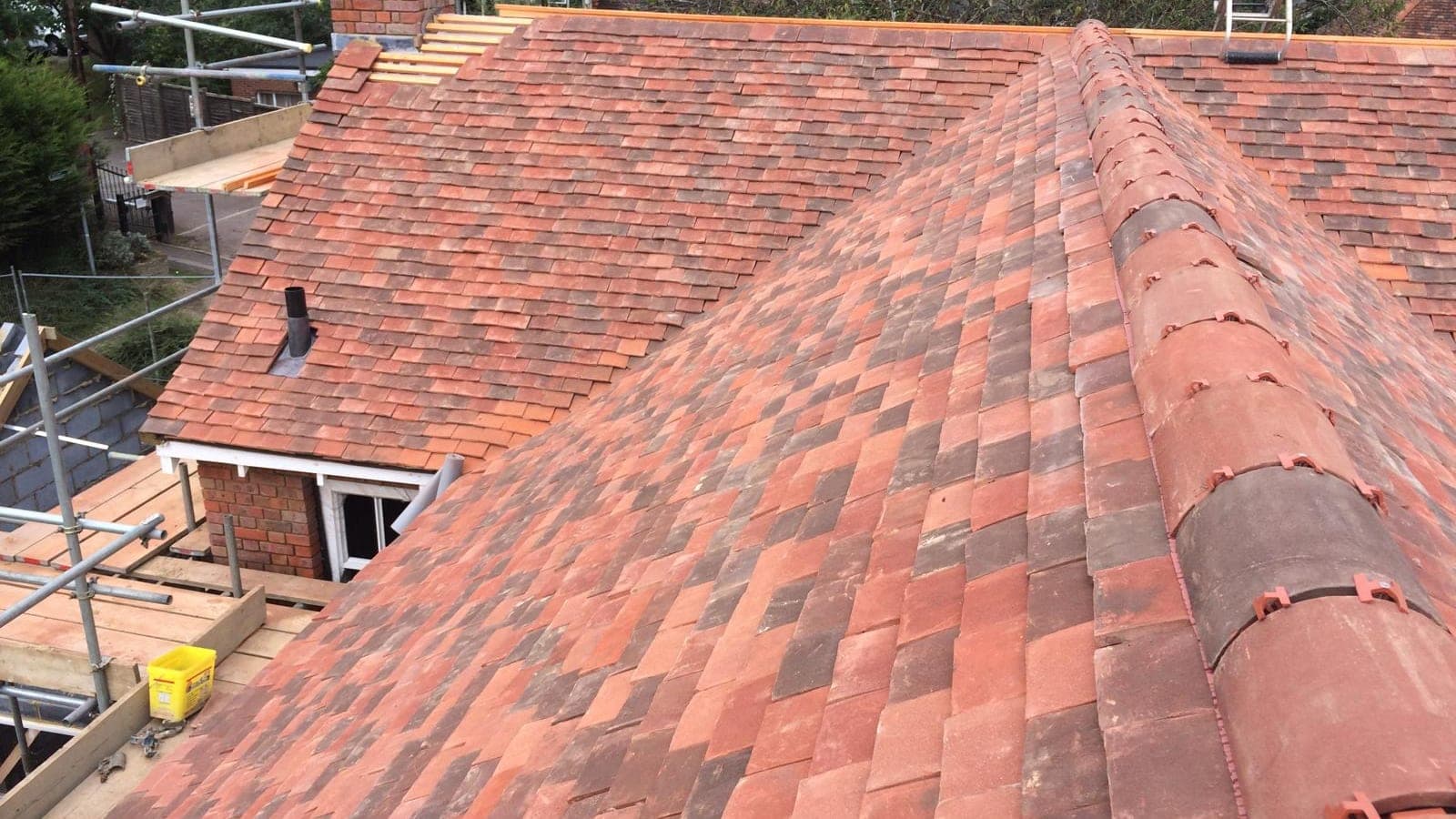
Roof valleys leak before any other part of the roof because they're the lowest point where two roof slopes meet, so every drop of rain from both sides funnels through that single channel. In Ashley Green, that problem is made worse by the amount of leaf litter and debris that blows off surrounding trees and hedgerows, which sits in the valley trough and traps moisture against the lining. MP Roofing repairs failing valleys, whether they're lead lined, valley tile or GRP, by identifying the actual point of failure first and fixing that properly rather than patching over it, with a fixed written quote before any work starts.
Why Do Valleys Leak Before the Rest of the Roof?
A valley is a concentration point. Instead of rain hitting one slope and running off, water from two roof pitches drains into a single channel and has to travel further before it clears the roof. That means:
- More volume, more often. A valley handles several times the water flow of a flat section of tiling in the same downpour.
- More debris collects there too. Leaves, moss and grit wash down both slopes and settle in the trough rather than clearing away.
- The lining takes the strain. Whether it's lead, mortar-bedded valley tiles or a GRP trough, that lining material is doing all the work of keeping water out at the one point where two roof structures join.
- Fewer fixing points. Valleys often have less mechanical fixing than the surrounding tiles or slates, relying instead on the lining and the bedding around it staying sound.
Once any one of those elements starts to degrade, water finds a way through, and it usually shows up as a stain on a bedroom ceiling or in a loft long before the rest of the roof shows any sign of a problem.
What Makes Ashley Green Roofs Particularly Prone to This?
Ashley Green sits on the edge of the Chilterns, with a good number of properties close to mature trees, hedgerows and open countryside. That has a direct effect on valley performance:
- Leaf and debris build-up. Autumn leaf fall from nearby woodland settles in valley troughs and can block the flow of water, causing it to back up under the tiles or lead upstand.
- Moss growth. Damp, shaded valleys on north-facing slopes are exactly where moss takes hold first, and moss holds water against the lining far longer than a clear surface would.
- A mix of older and newer roofs. Ashley Green has a range of period cottages alongside more recent housing, so valley construction varies widely from traditional lead work to mortar-bedded tile valleys and, on some extensions or garages, GRP fibreglass.
- Exposure. Being on higher, more open ground than parts of Chesham itself means valleys here can take a harder battering in storms and driving rain.
Lead Lined, Valley Tile or GRP: Which One Do You Have, and How Do They Fail?
The repair approach depends entirely on which type of valley is on the roof. Here's how the three compare:
| Valley type | How it's built | Typical failure point | Usual repair |
|---|---|---|---|
| Lead lined | A sheet of lead dressed into the valley beneath the tiles or slates | Splits from age, thermal movement, or fixings pulling loose | Re-dress or re-line the affected section of lead |
| Valley tile (swept or laced) | Tiles cut and bedded together with mortar, no separate lining | Cracked mortar joints, slipped or cracked tiles at the join | Re-bed loose tiles, replace cracked tiles, repoint |
| GRP (fibreglass) | A moulded resin trough, usually on flat or low-pitch sections | Cracking in the gel coat, or failure where it meets adjoining roof coverings | Overlay or re-lay the affected section |
A proper inspection tells you which one you're dealing with and whether the problem is the lining itself or the debris and moss sitting on top of it. This is exactly the kind of assessment covered under roof repairs, and it's also where lead work and tiled roofing expertise matters, since a lead valley and a swept tile valley need completely different repair techniques.
How Does MP Roofing Repair a Failing Valley So It Doesn't Recur?
The repair process follows the same steps regardless of valley type:
- Inspect the actual failure point. Not just where the ceiling stain is, but where water is genuinely getting in, which can be some distance up the valley from where it shows inside.
- Clear the valley properly. Debris, moss and old mortar are removed so the true condition of the lining or tiling underneath can be seen.
- Give an honest verdict. If it's a localised split in the lead, a few cracked or slipped valley tiles, or a section of gel coat failure in a GRP trough, that's what gets quoted for, not a full re-line if it isn't needed.
- Fixed, written quote before work starts. Scaffold and skip costs, where needed, are built into that price from the outset rather than added afterward.
- Repair or re-line as agreed. Lead is re-dressed or replaced in the affected run, tile valleys are re-bedded and repointed, or GRP is overlaid, and the surrounding tiles or slates are reset properly so water sheds correctly again.
- Clear the site. Old materials are removed and the area left tidy.
Repair or Full Re-Line: How Do You Know Which You Need?
Not every leaking valley needs stripping out completely. A localised split in lead near a chimney, or a handful of cracked valley tiles, is usually a straightforward repair. A full re-line becomes necessary when the lead has failed in multiple places along its length, when mortar bedding has broken down extensively across a tile valley, or when a GRP trough has cracked through in more than one spot. MP Roofing's job is to tell you honestly which category your roof falls into, based on 32+ years of hands-on roofing experience, rather than defaulting to the bigger job. If a repair will genuinely hold, that's what gets recommended.
What Happens If the Leak Looks Urgent?
A valley leak during or straight after a storm is treated as a same-day priority, with 24/7 availability for active leaks and storm damage. If the water ingress is active and getting into the roof structure or ceiling below, that's assessed and dealt with straight away. If the valley is damp but not actively letting water through in current weather, you'll be told honestly that it can wait for a scheduled, dry-weather repair rather than being pushed into an emergency callout that isn't needed. Every job, urgent or planned, carries the same £2m public liability cover and a free written quote before anything is agreed.
FAQ
Why does my roof only leak in one spot when it's a valley problem?
Because a valley concentrates water from two roof slopes into one narrow channel, a single crack, split or loose tile at any point along that channel is enough to let water in, even though the rest of the roof covering either side is completely sound.
Can a valley be repaired without scaffolding the whole roof?
It depends on where the valley sits and how it's accessed safely. Some valley repairs can be done from a ladder or tower, but where full scaffold access is genuinely needed, that cost is included in the fixed written quote from the start, not added on once work begins.
How do I know if it's my valley leaking rather than the chimney flashing?
A proper inspection is the only reliable way to tell, since both can produce a similar ceiling stain. Valley leaks tend to track down from the point where two roof slopes meet, while flashing leaks usually originate at a chimney, wall abutment or roof window.
Does moss in the valley actually cause leaks, or is it just cosmetic?
Moss does more than look untidy. It holds water against the lining or mortar for far longer than a clear valley would, which speeds up the breakdown of lead, mortar joints or GRP gel coat, so clearing it is a genuine part of preventing future leaks.
Will you tell me if my valley just needs a repair rather than a full re-line?
Yes. The assessment is based on what's actually failed, and if a targeted repair to the affected section will hold, that's what gets quoted for rather than recommending a bigger job than the roof needs.
Written by MP Roofing, roofers in Chesham covering Buckinghamshire and west Hertfordshire. If something here applies to your roof, give us a ring on 07500 939396.