
Fascias, soffits, bargeboards and cladding
Capping over rotten timber hides the problem for about five years. We strip the old boards off, check what's underneath, and put the eaves ventilation back in so the roof space can breathe.
What we do
The detail on upvc fascias & soffits
Full replacement versus capping over
Capping means screwing a thin uPVC sheet over your existing timber fascia and leaving the timber in place. It's quick, it's cheap, it looks identical on the day, and it's the reason a lot of people are having the job done twice. The rot underneath doesn't stop - it now has a plastic cover keeping the moisture in, and the fixings for the new board and the gutter are going into timber that's already soft. Full replacement means the old boards come off, we look at the rafter feet, we replace anything that's gone, and the new board is fixed to sound timber. We quote for full replacement. If somebody has quoted you noticeably less, check which one they're doing.
Eaves ventilation
Your roof space needs air moving through it or moisture from the house condenses on the underside of the roof, soaks the insulation and rots the timbers. Replacing soffits is the moment that ventilation either gets restored or gets sealed up. The requirement is a continuous 10mm equivalent gap at the eaves for a roof pitched above 15 degrees, and 25mm for anything shallower - provided by vented soffit board or by circular vents at proper centres. Boarding straight over the eaves with solid soffit and no vents is a common shortcut and it causes condensation problems that show up in the loft a year or two later.
Bargeboards and verges
Bargeboards run up the gable and take more weather than anything else on the house, which is why they're usually the first to go. They also do a job: they close off the end of the roof void. Replacing them is the point at which a dry verge system can go on at the same time, which stops the mortar verge cracking and letting wind under the tiles. Doing both together saves a second scaffold.
Cladding
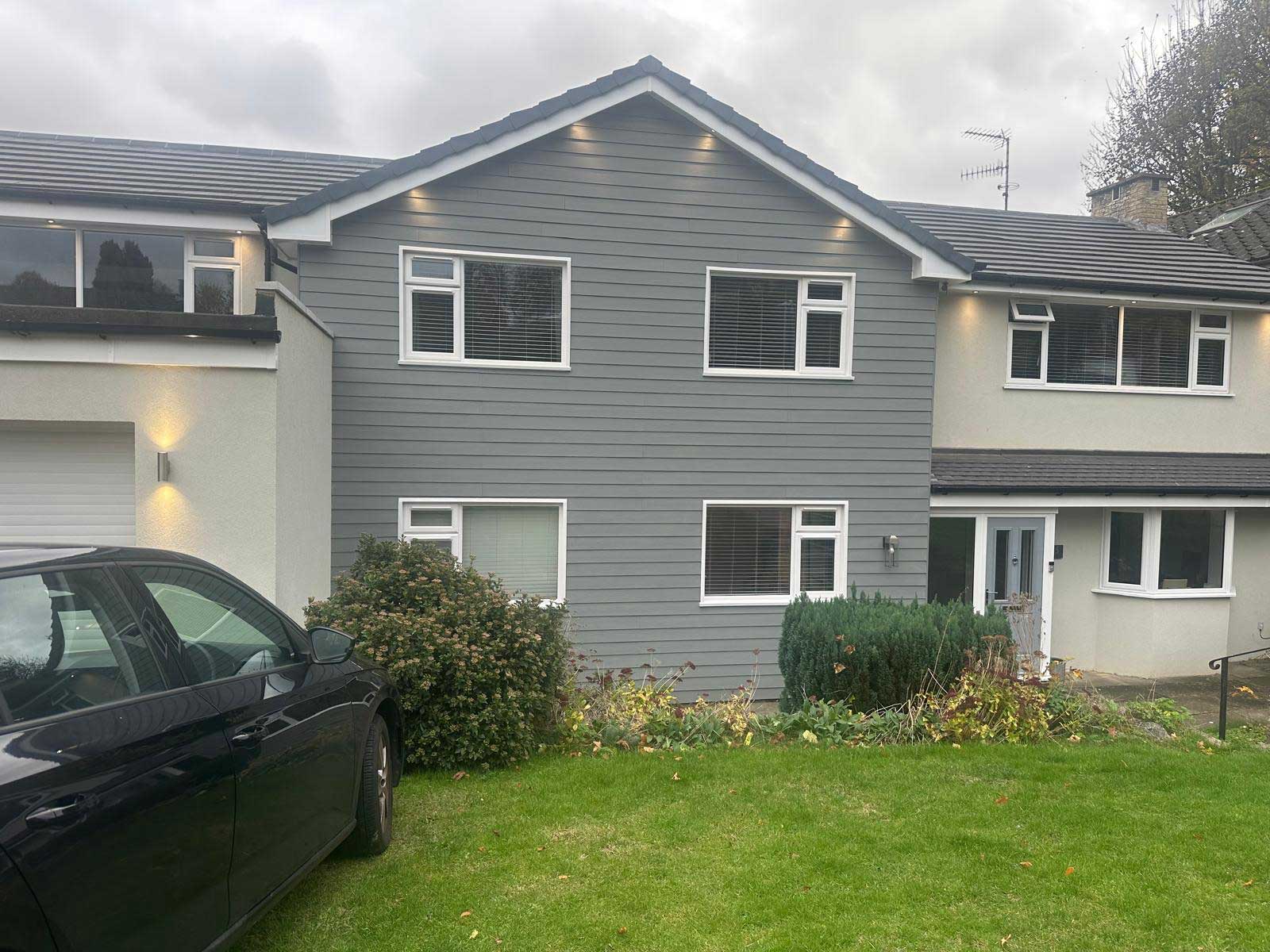
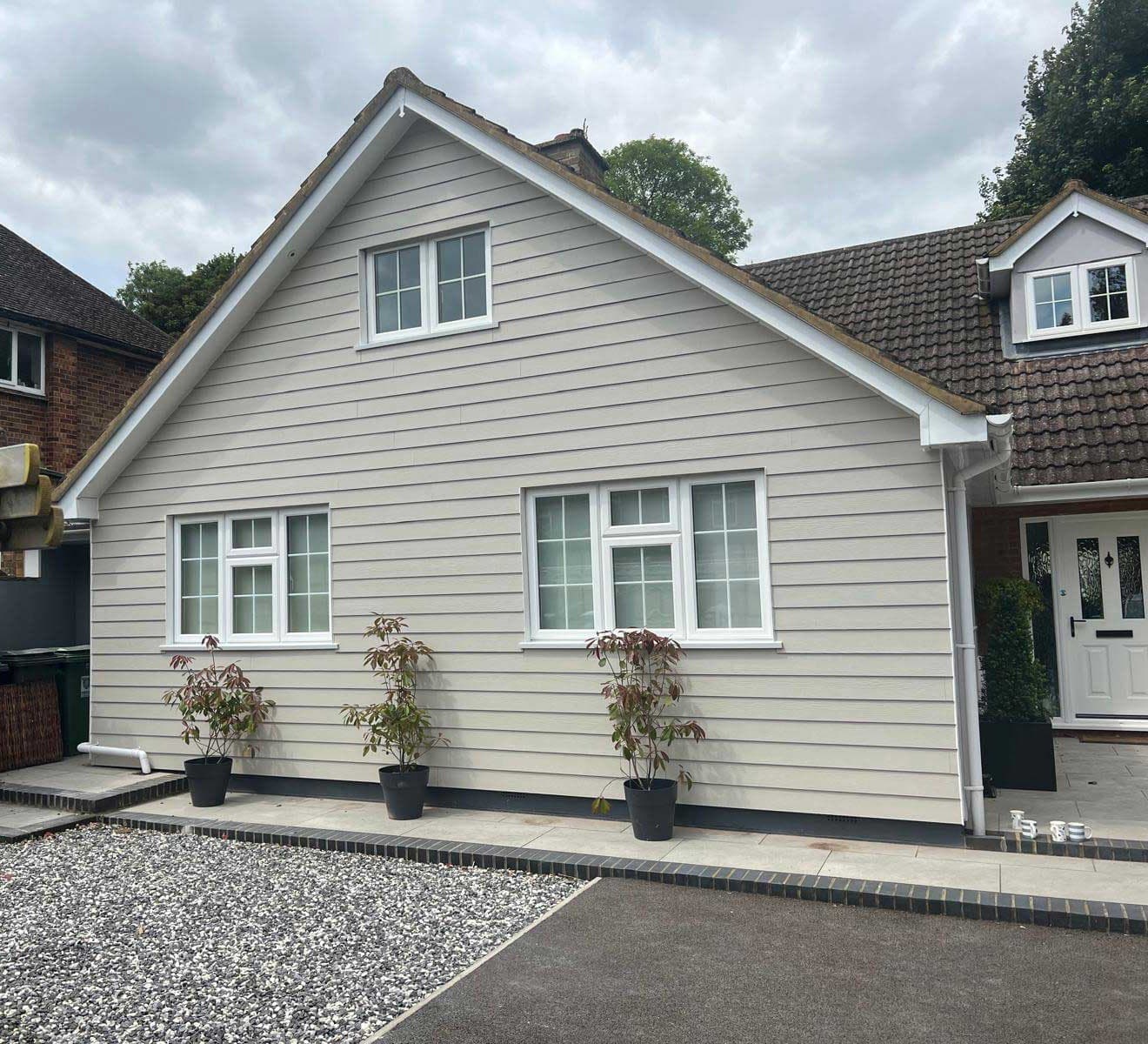
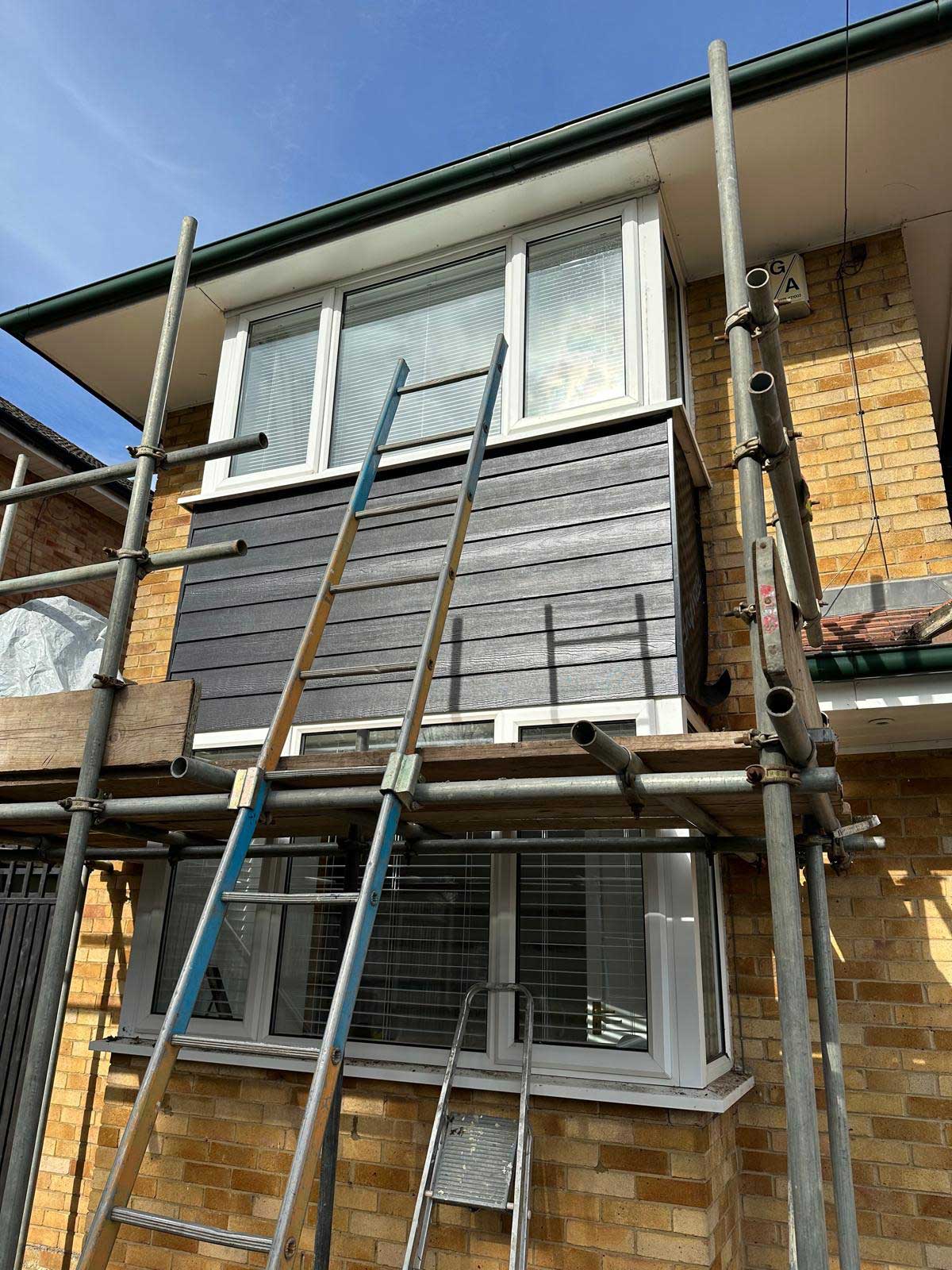
We fit weatherboard cladding as well - the fibre cement and composite boards that have become popular on gable ends, dormer cheeks and first-floor elevations around here. It's a genuine improvement on painted render or tired pebbledash, it needs no maintenance beyond a wash, and it comes in a range that suits both modern and older property. It goes on a battened and ventilated cavity rather than straight onto the wall, which is what keeps it dry behind. A good part of our recent work has been exactly this.
Guttering integration
The gutter comes off to do the fascia and goes back on afterwards, so this is the natural moment to replace it if it's near the end. Doing the two together costs a fraction of doing them as separate visits, because the scaffold and the access are already paid for. We'll always price the gutter alongside so you can make that call once rather than twice.
How it works
Four steps, in this order
01
Free inspection
We come out, get up and look properly, and photograph anything you can't see from the ground. If it turns out you don't need the work, we'll say so.
02
Written fixed quote
You get the price in writing with the materials named and the scaffold and waste included. It doesn't move unless we find something hidden and agree it with you first.
03
Scaffold and works
We book the scaffold, give you a start date and keep to it. The site gets cleared at the end of every day, not just at the end of the job.
04
Sign-off
We walk you round the finished work with the before and after photographs, clear the scaffold, and leave you the details of what was used and where.
What it costs
How we price upvc fascias & soffits
Priced by the metre run of fascia, soffit and bargeboard, plus any rafter-end repairs found once the old boards are off. We identify likely timber repairs at the inspection and put a figure against them in the quote, so a bad rafter foot isn't a surprise phone call. Guttering is quoted alongside, because doing it at the same time is much cheaper than a second visit.
Questions
The things people ask
Should I cap over or replace?
Replace. Capping over leaves rotten timber in place with a plastic cover keeping the damp in, and the new fixings go into wood that's already soft. It buys a few years and costs you the job twice.
Will new soffits stop my roof breathing?
Only if they're fitted badly. Done properly you get vented soffit board giving a continuous 10mm gap - 25mm on a shallow pitch - which is more ventilation than most original timber eaves ever had.
How long does uPVC last?
Twenty to thirty years on good quality board. It doesn't rot and it doesn't need painting; it will need washing occasionally.
Can you do it without scaffolding?
On a single-storey run sometimes, from a tower. On a two-storey elevation it needs scaffold, and that's in our quoted price.
Do you do the cladding I can see in your photos?
Yes - weatherboard cladding on gable ends, dormers and first-floor elevations, fitted on a ventilated batten cavity. It's a good part of what we do. Ring and we'll come and look at the elevation.
Can you match my existing colour?
Usually. White, black, anthracite grey, rosewood and light oak are all standard. We'll bring samples to hold against the house before you decide.
Where we work
uPVC Fascias & Soffits across Buckinghamshire and west Hertfordshire
We carry out upvc fascias & soffits in Chesham, Chesham Bois, Ley Hill, Hyde Heath, Amersham, Ashley Green, Latimer & Chenies, Little Chalfont, Bovingdon, Great Missenden, Berkhamsted and Chalfont St Giles, and everywhere else within 10 miles of Chesham. See the full list of areas we cover.
Related services
Need upvc fascias & soffits doing?
Tell us what the roof is doing and we'll come and look at it. Free inspection, written fixed price.