
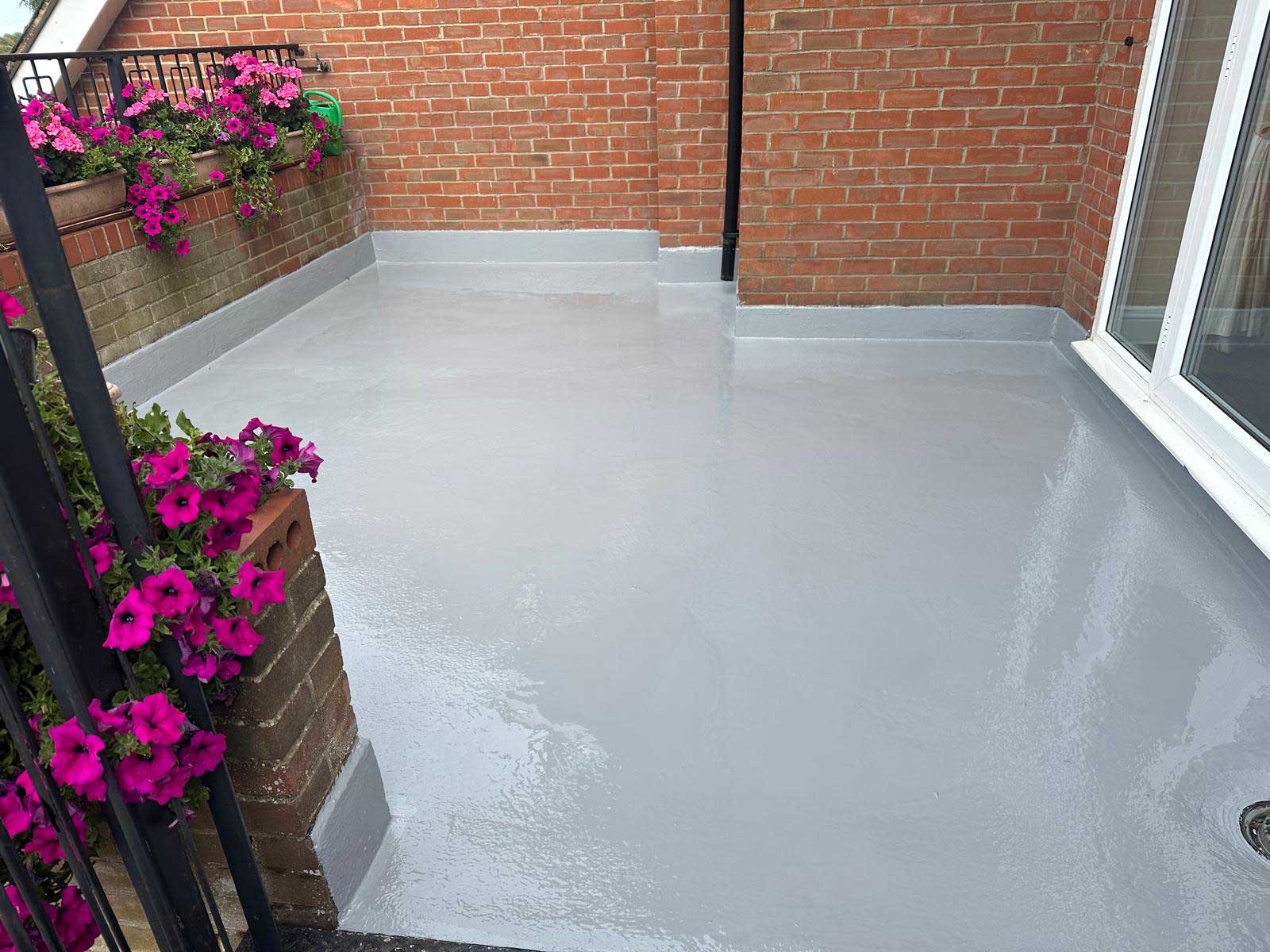
Flat roofs that drain properly and stay dry
Most failed flat roofs failed at the falls, the upstands or the outlet - not in the middle. We build the falls in, take the upstands high enough, and finish in GRP, EPDM or torch-on felt depending on what the roof is doing.
What we do
The detail on flat roofing
GRP fibreglass
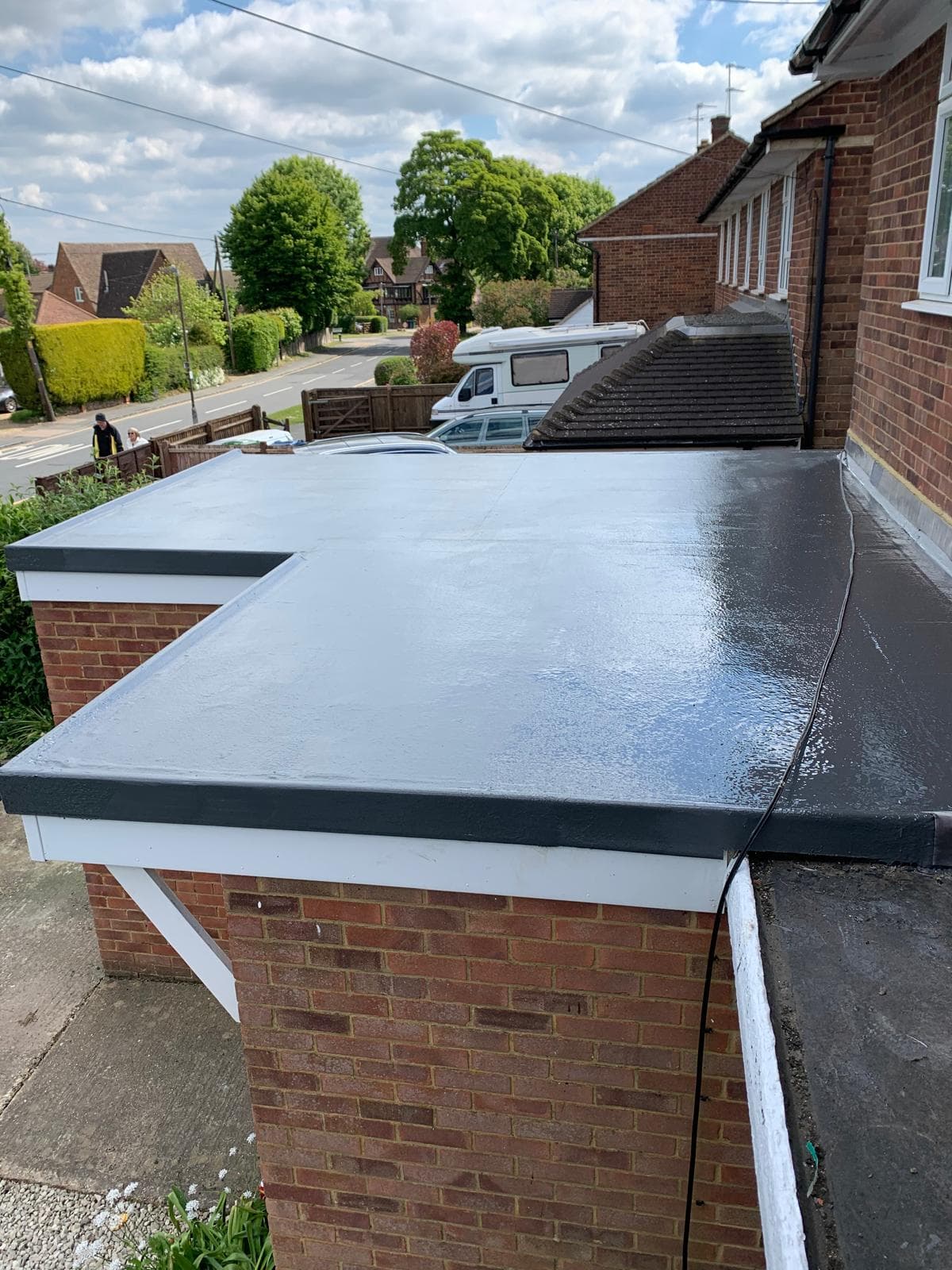
GRP is laid wet as a glass mat and resin and cures into one seamless sheet with no joints anywhere, including around the trims and outlets. It's rigid, it takes foot traffic well, and it's the right answer for a balcony or anywhere that will be walked on. Expect twenty to thirty years. The two things that matter are that it goes onto a proper OSB3 deck rather than whatever was there, and that it's laid in dry weather above about five degrees - GRP laid in the cold or the damp will not cure properly, and that shows up as a soft patch two years later, not two weeks later. We won't lay it in the wrong conditions, even if that means moving the date.
EPDM rubber
EPDM is a single sheet of rubber membrane, cut to the roof and bonded down, with no seams at all on most domestic roofs. It's very forgiving of building movement, it handles UV well, and manufacturers will quote fifty years on the membrane. It's the lowest-maintenance option and generally what we'd recommend for a garage or extension roof that nobody will walk on. It's slightly softer underfoot than GRP, so for a balcony we'd steer you the other way.
Torch-on felt
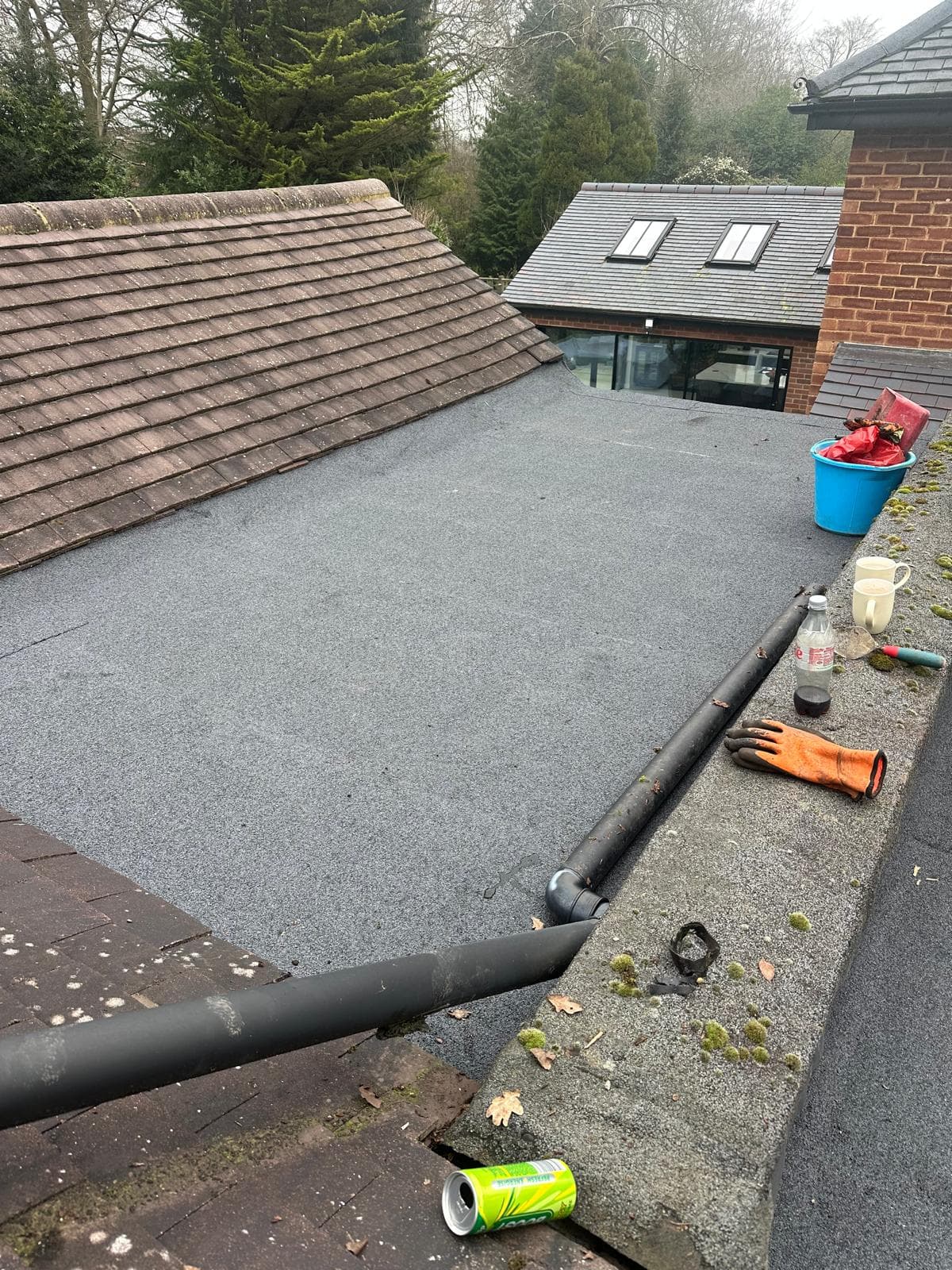
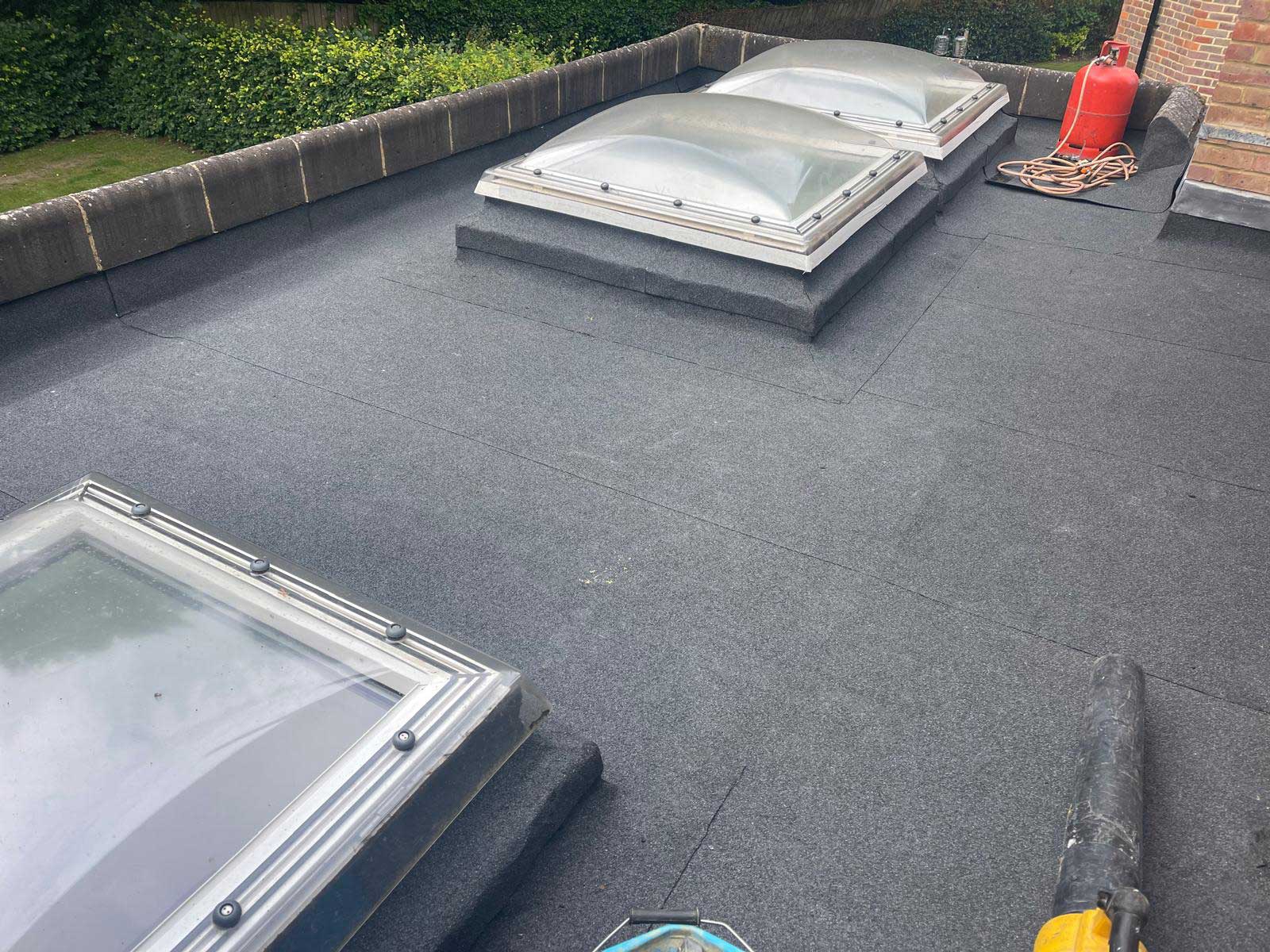
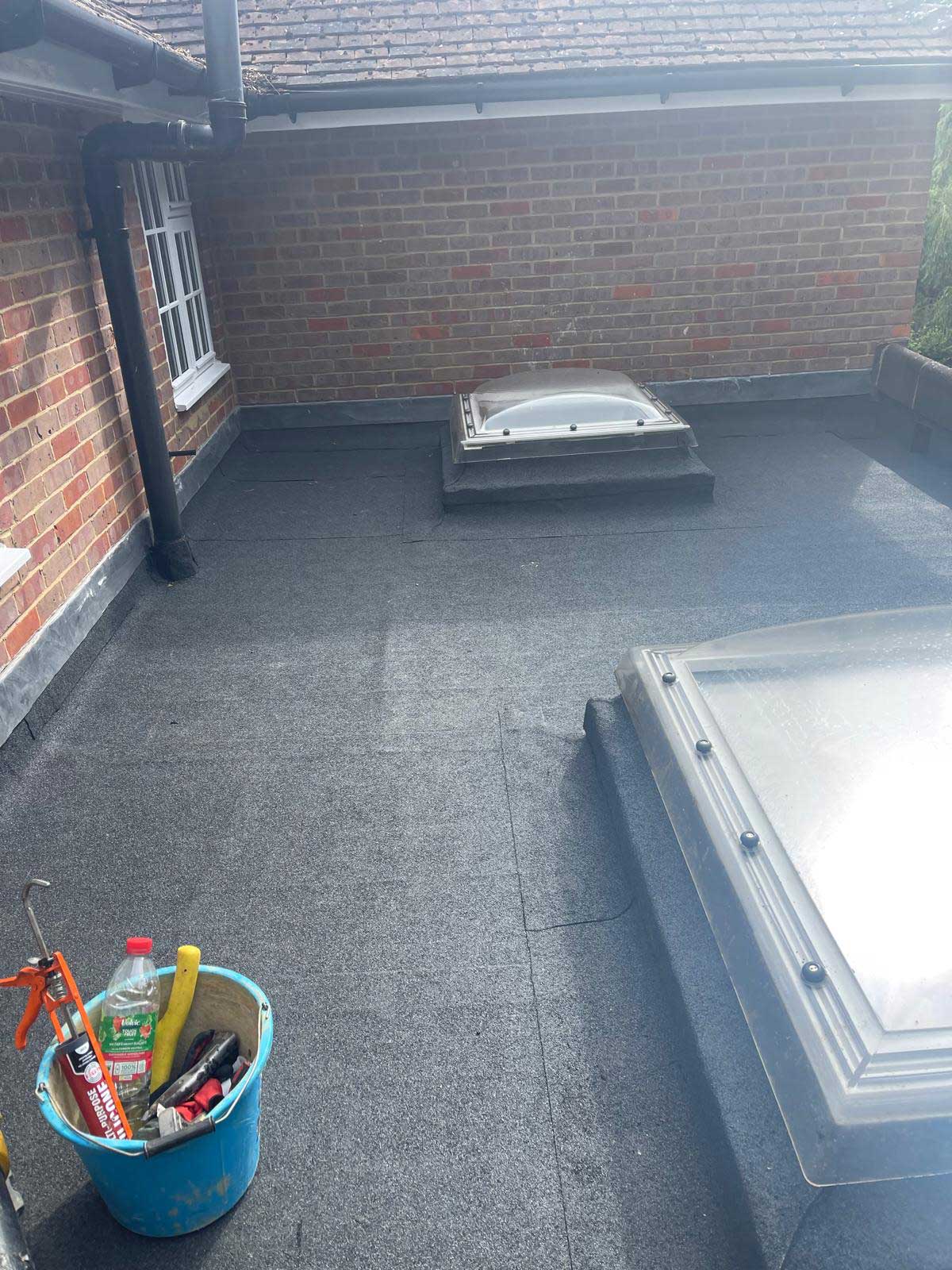
Modern torch-on felt is a long way from the pour-and-roll felt that gave flat roofs their reputation. Laid in two or three layers with the caps torched down and a mineral finish on top, it gives twenty to twenty-five years, it's repairable, and it copes with awkward shapes and multiple upstands better than anything else. It's what we use on cut-up roofs with rooflights, parapets and changes of level, where a single-sheet system would be all detail and no field.
Falls and ponding - the thing that actually matters
A flat roof is not flat. It needs a designed fall to the outlet, and the standard advice is to design to 1:40 so that you still have at least 1:80 after the deck has settled and deflected. Water standing on a roof for more than a couple of days after rain is ponding, and ponding is what kills flat roofs - it finds any weakness, it freezes and expands in winter, and it accelerates UV damage. If your existing roof ponds, re-covering it without correcting the falls is a waste of money, and we'll say so. Firring strips or tapered insulation put the fall back in.
Warm deck, cold deck and insulation
A warm deck puts the insulation above the deck and under the waterproofing, which keeps the structure warm and dry and is what current Part L work generally requires. A cold deck puts insulation between the joists with a ventilated void above, and it goes wrong when that ventilation gets blocked - you get condensation on the underside of the deck, which looks exactly like a leak and is why plenty of "leaking" flat roofs are nothing of the sort. If we're stripping a roof back anyway, upgrading it to a warm deck is usually the sensible moment.
Trims, outlets and upstands
Nearly every flat roof failure we're called to is at an edge, not in the middle. Drip trims that are too shallow let water track back under. Upstands that stop short of 150mm let driving rain over the top. Outlets that were sized for a smaller roof back up in a downpour. We detail these properly, and when we're pricing a repair on someone else's roof we'll tell you if the problem is the detail rather than the covering - because re-covering the field won't fix an edge.
How it works
Four steps, in this order
01
Free inspection
We come out, get up and look properly, and photograph anything you can't see from the ground. If it turns out you don't need the work, we'll say so.
02
Written fixed quote
You get the price in writing with the materials named and the scaffold and waste included. It doesn't move unless we find something hidden and agree it with you first.
03
Scaffold and works
We book the scaffold, give you a start date and keep to it. The site gets cleared at the end of every day, not just at the end of the job.
04
Sign-off
We walk you round the finished work with the before and after photographs, clear the scaffold, and leave you the details of what was used and where.
What it costs
How we price flat roofing
Flat roofing is priced by area, by the system you choose and by whether the deck underneath needs replacing - which we often can't tell until it's stripped. We price the deck replacement as a clearly identified provisional item so you know the worst case up front rather than getting a phone call halfway through. Insulation upgrades are priced separately so you can decide.
Questions
The things people ask
GRP, EPDM or felt - which should I have?
Balcony or anything walked on: GRP. Garage or extension nobody goes on: EPDM. Complicated roof with rooflights, parapets and changes of level: torch-on felt. We'll recommend one and explain why for your specific roof.
How long will a flat roof last?
EPDM fifty years on the membrane, GRP twenty to thirty, torch-on felt twenty to twenty-five. All of those assume the falls are right - a roof that ponds will fail early whatever it's covered in.
Can you go over the existing roof?
Sometimes, but usually we'd advise against it. Overlaying hides the condition of the deck, adds weight, and does nothing about falls that are already wrong. If the existing covering is sound and the falls are good we'll consider it and tell you the risks.
Water is coming through but only in winter. Is that a leak?
Often it isn't - it's condensation forming on the underside of a cold deck with blocked ventilation. It's worth diagnosing properly, because re-covering the roof won't fix it.
Do I need building regulations approval?
If more than half the roof area is being replaced, the work generally has to meet current insulation standards, which usually means a warm deck build-up. We'll flag it at quote stage rather than after.
Can you fit a rooflight while you're doing it?
Yes, and it's much cheaper to do at the same time as the covering than to cut one in afterwards.
Where we work
Flat Roofing across Buckinghamshire and west Hertfordshire
We carry out flat roofing in Chesham, Chesham Bois, Ley Hill, Hyde Heath, Amersham, Ashley Green, Latimer & Chenies, Little Chalfont, Bovingdon, Great Missenden, Berkhamsted and Chalfont St Giles, and everywhere else within 10 miles of Chesham. See the full list of areas we cover.
Related services
Need flat roofing doing?
Tell us what the roof is doing and we'll come and look at it. Free inspection, written fixed price.