
8 September 2026
Re-Slating in Beaconsfield: How MP Roofing Helps You Decide Between Repair and Full Replacement
Re-slating Beaconsfield: how to tell if your slate roof needs full replacement or another patch repair, plus honest signs, costs and what MP Roofing checks first.
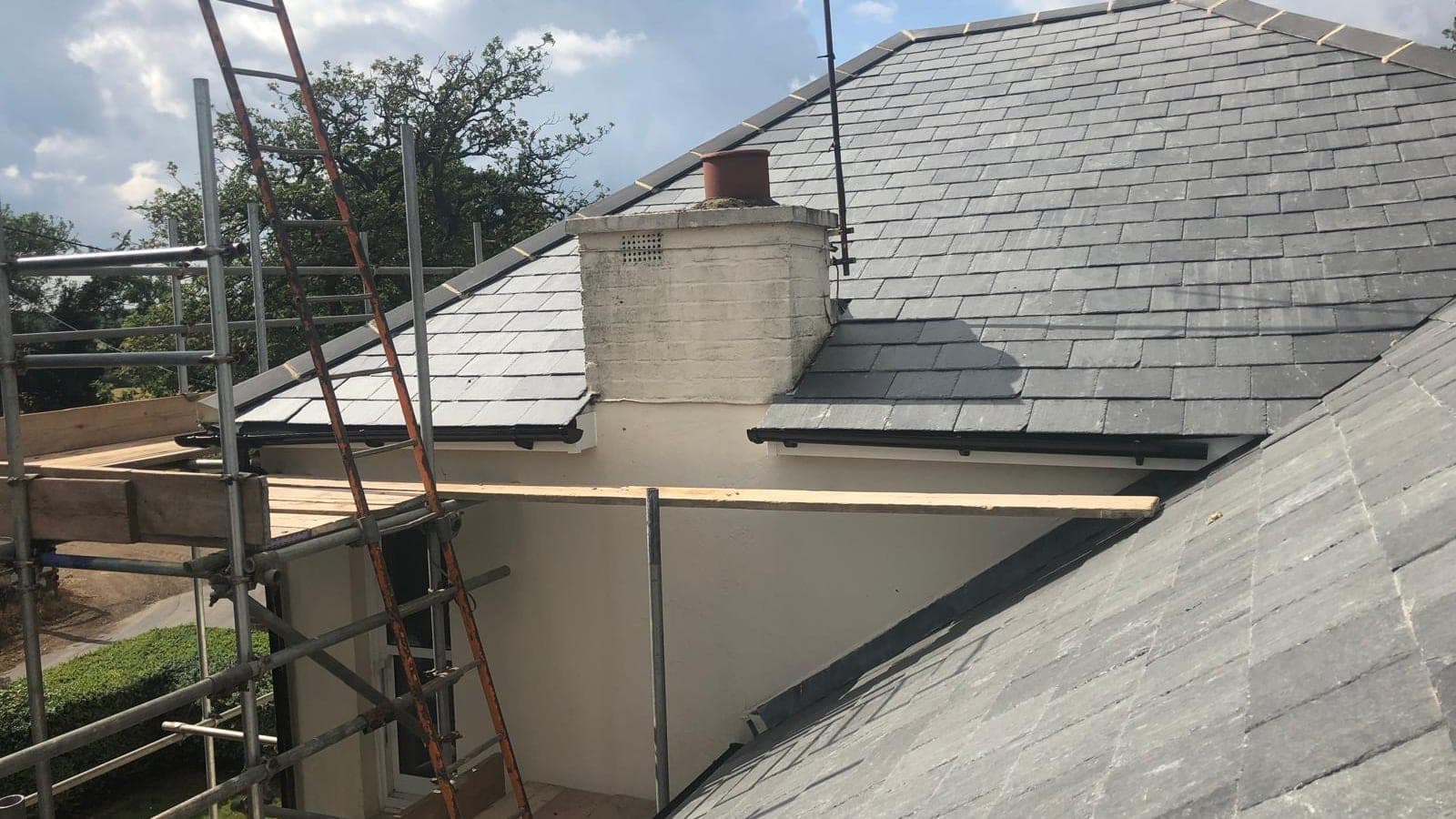
Re-slating in Beaconsfield becomes the right call when repairs are happening more than once a year, slipped or cracked slates are spreading across different parts of the roof rather than staying in one spot, or the slates themselves have started to laminate, curl or crack from age rather than from a single storm. If a roof is still failing in isolated, unrelated places after a repair, that's usually the underlying slate and fixings wearing out generally, not a one-off fault. A proper inspection, not guesswork, is what actually tells you which side of that line your roof sits on.
What's Actually the Difference Between a Patch Repair and a Full Re-Slate?
A patch repair fixes a specific, localised problem: a slipped tile from wind, a cracked slate from a fallen branch, a flashing detail that's failed at one chimney. It's targeted work on a roof that is otherwise sound.
A full re-slate strips the existing covering back to the roof timbers, replaces the underlay and battens, and re-lays new or reclaimed slate across the whole roof (or a full slope). It's the right approach when the problem isn't one slate or one detail, it's the general condition of the covering.
The confusion homeowners in Beaconsfield, Chesham and the wider area often run into is that both types of job can look similar from the ground: a missing slate here, a damp patch there. The difference isn't visible from the pavement. It's found by someone getting up and checking the fixings, the underlay, and how many slates are actually still sound underneath.
What Are the Signs a Roof Needs Full Re-Slating Rather Than Another Repair?
These are the practical signs worth taking seriously:
- Repeated repairs in different spots. If you've had three call-outs in two years, each in a different part of the roof, that's a pattern, not bad luck.
- Nail sickness. Older slate roofs were often fixed with nails that corrode over decades. Once the nails go, slates start slipping even though the slate itself is fine, and no amount of re-fixing individual slates solves it permanently.
- Slates that are thin, laminating or crumbling at the edges. This is the slate material itself reaching the end of its working life, not damage from an event.
- Sagging or dipping roof lines. This can point to failing battens or timber beneath the slate, which repair work on the surface won't fix.
- Widespread damp staining in the loft, rather than a single stain traceable to one flashing or one slate.
- The roof is genuinely old and has never been touched. Many roofs in this area are well past the point where general slate degradation, rather than isolated faults, is driving the leaks.
If none of those apply and the issue is one damaged area, a repair is very likely the honest and correct answer, and that's what should be recommended.
How Many Repairs Is Too Many Before It's Worth Re-Slating?
There's no fixed number that applies to every roof, because it depends on the roof's age, slate type and how the repairs are distributed. But a useful rule of thumb: if you're calling out for a repair more than once a year, and each visit is fixing a different area rather than the same spot recurring, the maths starts favouring a full re-slate. Ongoing repair costs on a failing roof add up, and each repair also involves disturbing slates around the fault, which can shorten their remaining life too.
Patch Repair vs Full Re-Slating: A Straight Comparison
| Patch Repair | Full Re-Slating | |
|---|---|---|
| Best suited to | One-off damage: storm, falling debris, single failed flashing | Widespread age-related wear, nail sickness, repeated unrelated failures |
| Scope of work | Fixes the specific fault found | Strips back to timbers, new underlay, battens and slate |
| Typical roof condition | Otherwise sound roof covering | Slates cracking, laminating or slipping across multiple areas |
| Underlying timber/battens | Usually untouched | Inspected and replaced where needed |
| Value over time | Cost-effective for isolated problems | Resets the roof's condition, avoiding repeated call-outs |
What Happens During a Re-Slating Job?
A full re-slate on a house in Beaconsfield or the surrounding towns typically follows this sequence:
- Inspection and written quote. The roof is assessed and a fixed, itemised quote is provided in writing before anything is booked in, with no charge for the initial visit.
- Scaffolding. Cost is included in the quoted price from the start, not added afterward.
- Strip-off. Old slates and underlay are removed, and the timber deck and battens are checked.
- Timber and batten repairs, if needed, agreed with you before proceeding.
- New underlay, battens and slate, using natural Welsh, Spanish or reclaimed slate depending on the property and what's specified.
- Lead detailing around chimneys, valleys and abutments, dressed and welded as needed.
- Site clearance. Skip costs are included in the quote, and old materials are removed once the job's done.
More detail on how slate work is specified and carried out is covered on the slate roofing page.
Will You Be Pushed Into a Full Re-Roof If a Repair Would Actually Do?
No. The whole point of an honest inspection is to say clearly whether a problem is a single fault worth repairing or a general condition issue that repairs won't solve long-term. Fixed, written quotes are given before work starts, and if the answer is "this needs a repair, not a re-slate," that's what gets quoted. If you're weighing this up right now because of a leak, a slipped tile, or storm damage, the same honest assessment applies to standard roof repairs across Chesham, Amersham, Beaconsfield and the rest of the 10-mile service area.
What Does a Re-Slating Quote Actually Include?
A written quote should set out, item by item: scaffolding, strip-off and disposal, slate type and quantity, underlay and batten replacement, lead flashing and valley work, skip hire, and site clearance. With MP Roofing, that price is fixed once scaffolding is up and doesn't change unless new issues are found on the roof timbers or deck, and any changes are agreed with you first before extra work is carried out. There's no separate charge for the initial visit or the written quote itself.
FAQ
How do I know if my roof needs re-slating or just a repair?
Look at the pattern, not just the symptom. A single fault in one area, such as a slipped tile or a failed flashing, is usually a repair. Repeated, unrelated failures across different parts of the roof, laminating or crumbling slates, or nail sickness causing slates to slip generally, point to a full re-slate. An on-site inspection is the only reliable way to confirm which applies to your roof.
Is re-slating more disruptive than a repair?
Yes, because it involves scaffolding, a full strip-off, and re-covering the roof, so it takes longer than a targeted repair. But it also resets the roof's condition, meaning you're not paying for repeat call-outs on the same ageing covering every year or two.
Will scaffolding and skip hire be added to my bill later?
No. Scaffold and skip costs are included in the quoted price from the outset, not sprung on as extras once work has started.
Does MP Roofing cover Beaconsfield for re-slating work?
Yes. Beaconsfield sits within the 10-mile service area worked from Chesham, alongside towns including Amersham, Great Missenden, Chorleywood, Gerrards Cross, Berkhamsted, Hemel Hempstead, Wendover, Tring, Rickmansworth and Watford.
What if my leak is urgent and I can't wait for a full assessment?
Active leaks and storm damage get a same-day response assessment, available 24/7, so you get a straight answer on whether it needs fixing immediately or can safely wait for drier weather before a full inspection and quote.
Written by MP Roofing, roofers in Chesham covering Buckinghamshire and west Hertfordshire. If something here applies to your roof, give us a ring on 07500 939396.